








































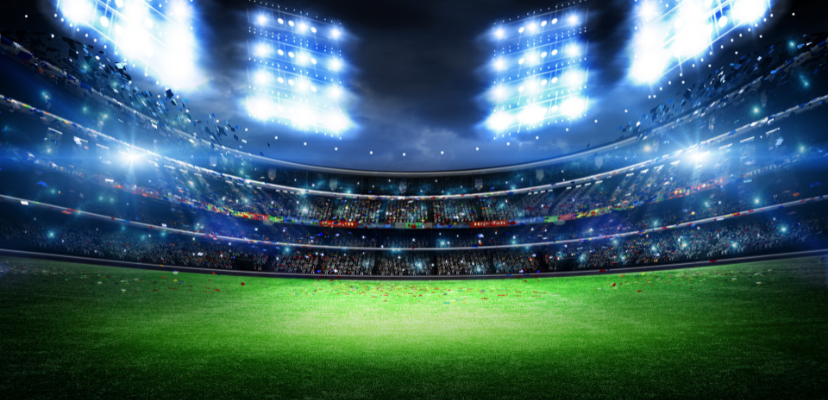
When you enter a cricket stadium during the night and see that everything is absolutely clear, the ball can be seen even when it is moving at great speed, the field is brightly lit, and the spectators are completely occupied, you can easily forget how much reasoning is involved in such lighting.
However, one of the most complicated aspects of the stadium’s design is the lighting of the cricket ground.
It’s not just about installing powerful lights. It is about providing that environment in which players will play their game in the best way possible, spectators will always have a moment to enjoy and broadcasters will be able to record the game in an amazing detail.
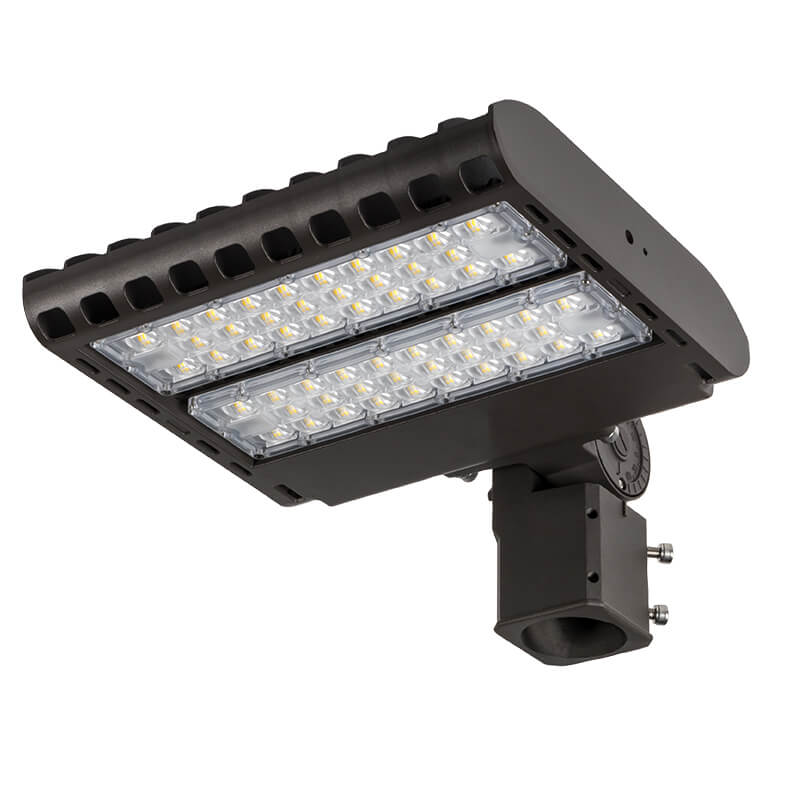
Lighting technology has been changing over the years. The prevailing systems in the stadiums were traditional systems such as halogen and metal halide, but nowadays, LED light bulbs have turned the game around entirely. It is more efficient, consumes less power and has way more control than could be with older technologies.
When it comes to designing a cricket ground or renovating an old one, the knowledge about the lighting functionality will prove to be the difference. Continue reading the article by Lighting and Supplies for a better understanding of the Cricket Ground LED Lighting.
Why Lighting Matters More in Cricket Than You Think?
Cricket does not involve the ball remaining close to the ground as it does in other sports. In this case, the ball moves high, quickly, and over long distances. Visual clarity is critical in tracking by players, particularly at night matches.
Even a minute lighting defect can:
- Bend the ball.
- Reduce reaction speed
- Affect a player’s timing
Meanwhile, fans require a good and unobstructed look in all sides of the stadium. Now add broadcasting to the mix, and the standards are even higher.
HD and 4K recording of contemporary matches requires that the lights be constant, even, and not flickering.
This is precisely the reason why LED lighting has been the choice of lighting in the world in cricket grounds.
The Shift from Traditional Lighting to LED Systems
For several years, stadiums used metal halide lamps. Although they were powerful, they possessed a number of disadvantages. They used up a lot of power, took time to heat, and usually gave disproportionate lighting.
LED lights transformed it all.
LEDs make the majority of the energy into light instead of the energy going to waste in the form of heat. They switch on immediately, come with a very long life span and offer uniform intensity of light during their period of existence.
Control is however, what makes the LEDs special.
A lighting designer is now able to fine tune the brightness, beam direction and distribution pattern. This implies that all the areas of the field can be illuminated as required without over-illuminating or having dark areas.
It’s not just an upgrade. It’s a complete transformation.
Learning about Lux Levels and Their Importance
The term lux level is one of the first you will come across when you are talking about stadium lighting. Simply put, lux measures how much light falls on a surface.
Cricket has various levels of play, which demand varying levels of lux.
In practice grounds or casual matches, less brightness is required. However, with the increase in intensity of competition, there is also the desire to have greater illumination.
An example is a local training ground that may be comfortable to use at approximately 300 lux. A professional domestic game needs more usually 500-750 lux.
But when you enter into international matches, more so live, the demands are at a higher level. The illuminance can be 1500-2500 lux.
This ensures that:
- The ball is at all times visible.
- Cameras do not distort any details.
- Players are able to respond swiftly and precisely.
Even the finest design of a stadium will not be sufficient without proper lux levels.
How is lighting calculated for a Cricket Ground?
The lighting design of a cricket ground is not all guesswork. It involves accurate computations.
A typical cricket field is around 70 meters in radius and has an area of about 15,400 square meters.
Designers can find out the amount of light required by the following easy formula:
Total lumens = Area x Level of Lux required.
In a professional match, which needs 750 lux, a total of more than 11 million lumens would be required.
The calculation assists in determining:
- The number of fixtures needed is how many?
- How powerful those fixtures must be!
- Where should they be placed?
It makes sure that the whole field is adequately and evenly lit.
The Importance of Proper Pole Placement
Lighting is not merely concerned with the intensity of lights. It is also concerning their position.
The four-pole or six-pole system has been adopted in most cricket grounds. Smaller grounds can use four poles, but larger or professional stadiums near always use six.
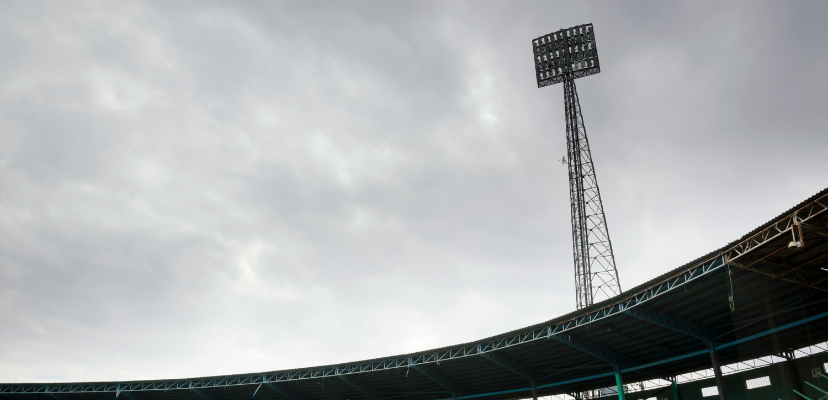
This is because of a mere reason. The light can be better distributed by using more poles.
With a six-pole system:
- Shadows are minimized
- Light in every part of the field.
- The viewing experience is enhanced.
This arrangement is nearly indispensable in the case of televised matches.
Creating Uniform Lighting Across the Field
Uniformity is one of the most difficult issues with regard to stadium lighting.
One side of the field should not be brighter than another. This disproportion can cause players to have a problem with judging distance and speed.
Equal lighting means that there is no variation in the brightness of the field.
It produces a fluent visual experience in which:
- Balanced footage is taken by cameras.
- Players are able to follow the ball easily.
- Viewers are able to enjoy continuous viewing.
This is possible through proper planning, quality optics and installation.
Why Flicker-Free Lighting is Non-Negotiable
Lighting should be used in modern day cricket to sponsor high speed cameras and slow motion replays.
When lights flicker at all, even a little, it can produce visible distortion on screen. This is particularly evident when it is played in slow motion.
LED lighting eliminates this issue.
It offers a stable light that does not change according to the camera speed. This is essential to:
- Replay clarity
- Broadcast quality
- Professional presentation
Even the most appropriate match can lose its visual effect without it.
Managing Glare for Better Visibility
Another aspect that is not very noticeable is glare, until it is a problem.
Too much glare can:
- Distract players
- Reduce visibility
- Cause discomfort to spectators
The current LED systems incorporate anti-glare in order to regulate the direction and intensity of light.
This ensures that the light is focused in the field, and not on the eyes of the people.
This translates to a comfortable and productive environment in terms of lighting.
Heat Dissipation and System Longevity
Although LEDs are efficient, they still generate heat. Unless that heat is handled appropriately, it may lower performance and decrease the life of the fixtures.
This is why the best LED systems have features of high heat dissipation.
These systems:
- Keep temperatures under control
- Maintain consistent brightness
- Prolong the maintenance of the lighting system.
This lowers the maintenance costs and increases reliability in the long-term.
The Beam Angle and its role in lighting design.
Beam angle determines how light spreads across the field. The spread of light in the field depends on the beam angle. When the beam is wider, it has a greater coverage but with lower intensity. A more focused beam offers more powerful light but in lesser area.
The key is balance.
Lighting designers carefully select beam angles to ensure:
- Even coverage
- Proper intensity
- No dark zones or hotspots
This is one of the most technical aspects of lighting design, but it has a huge impact on performance.
Weather Resistance and Durability
Cricket is an outdoor game, which is usually covered by unpredictable weather conditions.
Lighting systems should be constructed in such a way that they can resist:
- Rain
- Dust
- Humidity
- Temperature changes
Waterproof LED fixtures with high protection ratings are essential for long-term performance.
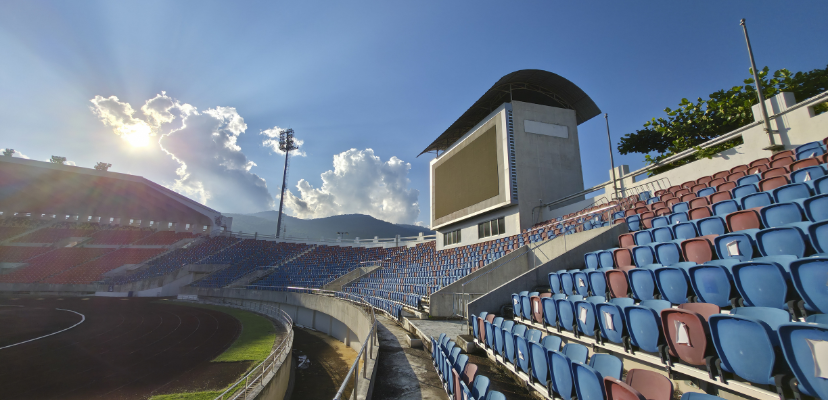
They ensure that lighting remains reliable, regardless of environmental conditions.
Conclusion
With so many options available, choosing the right system can feel overwhelming.
The key is to focus on quality and performance rather than just cost.
A good lighting system should offer:
- Consistent brightness
- Efficient energy use
- Long lifespan
- Low maintenance requirements
It should also be designed specifically for sports applications, not just general lighting. Cricket ground lighting is far more than a technical requirement. It is a critical part of the game itself.
It is an essential element of the game.
Every detail is important, whether it is the performance of players or the high-quality viewing experience.
Light-emitting diodes have transformed the architecture and functioning of stadiums. It is efficient, controlled and performant, which traditional systems just cannot perform.