




















Have you ever changed a bulb and immediately noticed something was wrong? The room looked too yellow. Or too harsh. Or strangely flat. Brightness is normally not involved in that reaction. It is all about the temperature of the light bulb color.
Most people focus on watts. Smart buyers focus on Kelvin. When you know the temperature of light, you no longer make guesses.
You begin selecting lights that suit your home, your mood, and your life. This guide will take you through the Kelvin scale for light bulbs, how to read a light bulb color chart, deconstruct a practical LED bulb temperature chart, and help you choose the correct LED color temperature in our collection.
What Is Light Color Temperature?
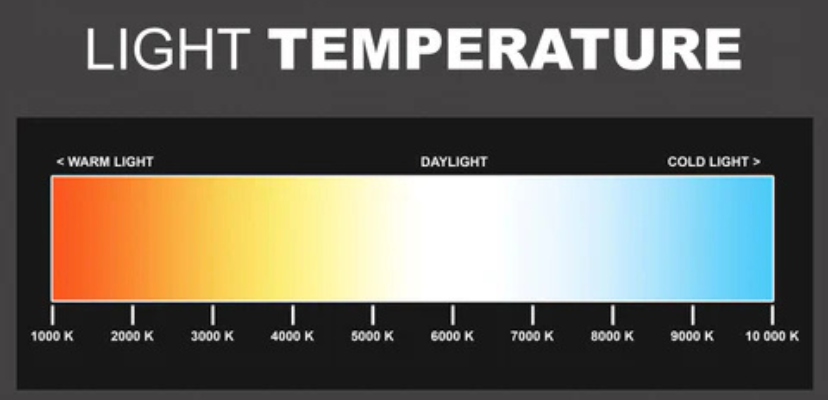
Light color temperature refers to the degree of warmth or coolness of a light. It is expressed in Kelvin and denoted by K. The lesser the Kelvin number, the warmer and golden the light. The more the better, it looks cool and white.
Physics is a source of this system. This is because when a theoretical black object is heated, its color shifts with increasing temperature. That was the reason that scientific measurement introduced the modern light bulb Kelvin scale adopted in the manufacturing of lighting.
Understanding the Light Bulb Kelvin Scale
Let us bring it down to real-life terms.
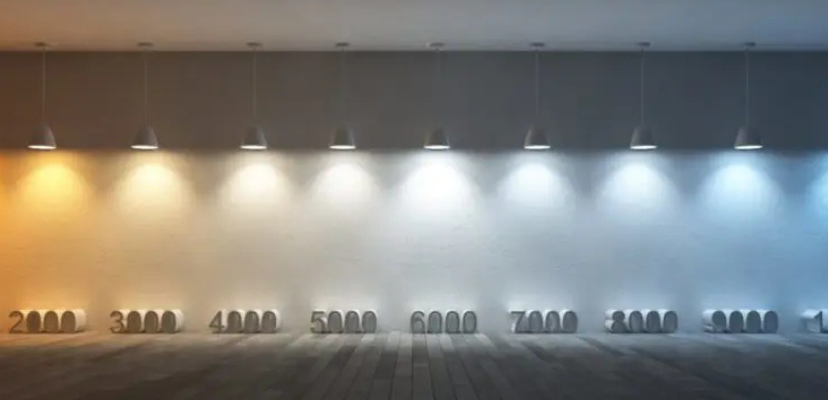
At the low end, approximately 1800K to 2700K, the light is warm and soft. Consider candlelight or standard incandescent lamps. This distance makes the conversation comfortable and close. The tone is more neutral between 3,000 K and 3,500 K. It is still friendly but cleaner and a little bit brighter.
The atmosphere becomes cold and contemporary at a 4000K mix of light. Whites appear sharper. Surfaces look clearer. This is referred to as cool white.
Passing 5000K, you travel in the daylight. It is an energetic, bright light and mostly applicable in areas with heavy tasks.
It does not matter which of the numbers is better. The trick is to use the number that would fit in your location.
LED Color Temperature Chart
When you search online about a LED color temperature chart or light bulb color chart, there are visual comparisons. However, this is what the charts actually entail in practice. Below is a simplified, SEO-friendly LED color temperature chart to help you quickly understand Kelvin ranges.
| CCT (Color Temperature) | Type of Lighting | Best Used For |
| 2200K–2700K | Mainly warm lights | Areas where ambient brightness and coziness are needed |
| 3000K–3500K | Soft white light | Residential interiors needing balanced warmth |
| 4000K–4500K | Brighter white light | Commercial spaces, kitchens, offices |
| 5000K and more | Bright bluish light | Commercial locations, task-heavy environments |
This light bulb color chart helps you align indoor lighting with purpose instead of guessing.
Why Is 4000K Light Color So Popular?
The most frequently used search query containing the 4000K light color is always high. There is a reason. It offers balance. It is not too yellow. Also it does not appear violently blue. Finally, it offers a clean, modern look that fits the contemporary interior.
Light Temperature and Human Psychology
The lighting has a direct influence on our mood.
Warm light promotes peace and calmness. That is how restaurants and hotels favor lower Kelvin values. It minimizes stress and brings about intimacy. Cooler color temperature lighting is neutral and makes one more alert and focused. Offices, study rooms, and hospitals are inclined to increased Kelvin scales as they are conducive to productivity.
All the light bulb temperatures react in different ways to your brain. That is why it is even more important to choose the right Kelvin than many people might imagine.
Light Bulb Warmth vs Brightness – Know the Difference
Among the greatest myths is the confusion between brightness and warmth.
The brightness is quantified in lumens. Light bulb color temperature is used to identify warmth. A bulb with a brightness of 2700K can make you feel cozy. You can have a dim 5000K bulb that still appears cool and crisp.
Lumens and Kelvin should be checked whenever buying an LED color temperature. The combination will be the final outcome.
Why LED Bulb Color Temperature Matters More Today
Incandescent bulbs were limited in the range of colors they produced. New LEDs provide a variety of colors and high accuracy. LED technology has enabled entities to generate a uniform, steady color temperature. However, quality varies.
A 4000K bulb and a 4000K bulb would not necessarily appear the same if there were a variance in manufacturing standards. Good LEDs have stability, color reproduction, and a long life.
Inexpensive bulbs tend to shift color after some periods, which results in incompatible lighting within the same room. It is the reason why it is important to select high-quality LED bulb color temperature products. Uniformity makes your whole area appear united.
Selecting the Right Color Temperature Lighting by Room
Rather than guessing, consider how you utilize the room. Bedrooms enjoy the warmer light bulb warmth level of around 2700K due to its ability to induce relaxation. Depending on the style of decor, living rooms usually perform well with 2700K to 3000K.
Kitchens usually do well with a light color of between 3500K and 4000K, since it is important to be clear. Bathrooms tend to become cleaner below 4000K. In home offices, 4000K or even 5000K color temperature lighting is advantageous for facilitating concentration. It is aimed at matching purpose and light temperature.
Updated Trends in Light Temperature
The contemporary interior design is moving towards layered lighting. Designers combine several Kelvin ranges rather than rely on a single source of overhead. As an illustration, a kitchen can have 4000K overhead lighting to accomplish the duties of a kitchen and 2700K under-cabinet lights to create a sense of coziness.
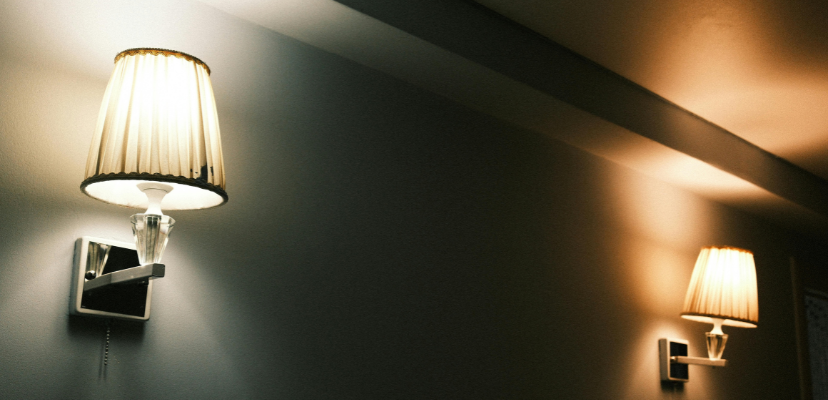
Smart LEDs can now be equipped with adjustable light bulb color temperature, which provides flexibility during the day to the house owners. Light in the morning is colder and refreshing. Evening lights can be made warmer to relax.
Why the Right Light Increases Property Appeal
Lighting influences perceived value. Research studies on real estate consistently show that homes with adequate lighting appear larger and more contemporary. Balanced light temperature is clean and improves the colors of the wall, the texture of the furniture, and even the architectural designs.
You can change the feeling of your home to that of an upgrade without remodeling by beginning with the light bulb temperature. It is among the least expensive changes that can be made.
How to Choose the Right LED Color Temperature From Us
When looking at our collection, all products include the light bulb’s color temperature, lumens, and where it should be used.
We pay attention to the correct color temperature output of the LEDs and stability. That is to say that the Kelvin number you read is the tone you receive. In cases of uncertainty, 4000K light is frequently safe nowadays. Still, 2700K is perennial as long as comfort is a major concern. We are not only interested in selling a bulb. It is to assist you to choose the appropriate light bulb color temperature that changes your space.
Final Thoughts: The Right Light Changes Everything
The light bulb Kelvin scale makes you understand which light bulb. You are strategic in your purchases rather than making random ones. Disappointment can be avoided by the proper light bulb color chart reference. As mentioned above, the LED color temperature chart will give you more detailed information.
You are not changing the light when you change the color temperature of your LED bulb. You are changing the atmosphere. At Lighting and Supplies, you can see all of our latest collection of color-temperature lighting options and find the one that makes your space feel just the way you want it to.