












When cities, businesses and developers go about designing outdoor lighting, the question always arises:
Are LED Street Lamps Better Than High-Pressure Sodium Lamps?
Sodium street lights were used on roads, highways, and in other areas of the population for decades. That common orange light was made a global standard. However, nowadays, everything is evolving rapidly. The world is moving toward LED technology as it replaces sodium lighting in urban areas.
But what is causing this change?
Is it merely a fad, or are LEDs really the smarter long-term decision?
In this guide, we are going to divide it into simple, real-life steps. Compared to sodium lamps and LEDs in terms of performance, energy savings, longevity, and price, you will see exactly which option is more reasonable for your project.
Understanding the Basics: Sodium vs LED Lighting
To make a comparison, one should first know the working principle of the two technologies.
What Do Sodium Street Lights Mean?
Sodium street lights involve the use of sodium vapor to generate light.
Two of these are:
- Low-pressure sodium lights (LPS) – Very efficient but extremely poor color rendering
- High-pressure sodium lights (HPS) – Brighter, more practical, widely used in street lighting
HPS vs LED street lights are the most common comparison today, as HPS has been the standard for years.
These lights are warm and yellow-orange in color. Although they are dependable, they have several limitations.
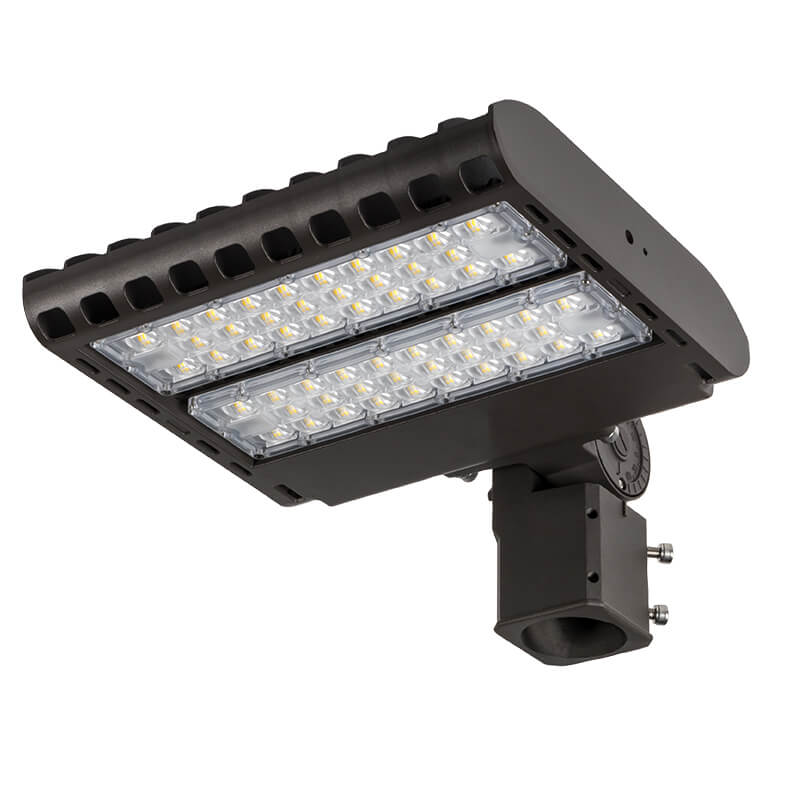
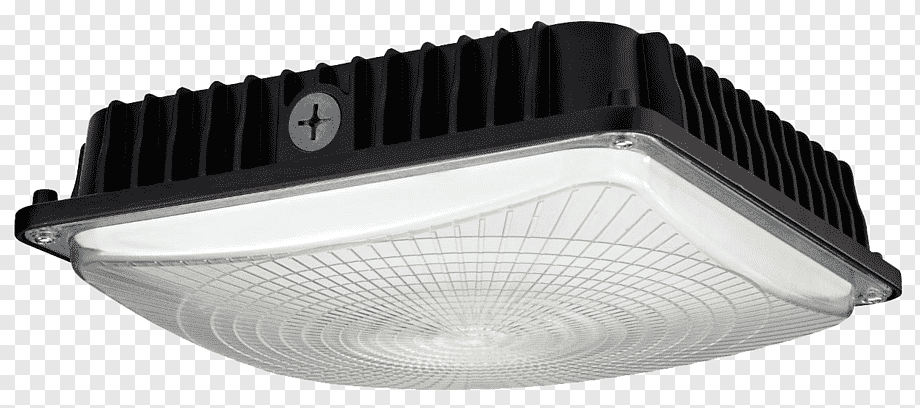
What Are LED Street Lamps?
LED is an acronym for Light-Emitting Diode. LEDs do not depend on gas or heat, unlike sodium lamps. They directly use semiconductors to generate light.
This distinction alters all that.
Compared to LED, high-pressure sodium, the comparisons typically point to:
- Better energy efficiency
- Longer lifespan
- Improved visibility
- Lower maintenance
LED vs High-Pressure Sodium: Key Differences
We are going to start deconstructing the most critical comparison points
1. Energy Efficiency (Biggest Game Changer)
In terms of high-pressure sodium lights versus LED energy consumption, LEDs are the definite winner.
Conventional sodium streetlight systems dissipate a lot of energy as heat. Instead, LEDs transform most of the energy into light.
Real Comparison:
- 250W HPS = about 100W-120W LED equivalent.
- Energy savings: 50% to 70%
This implies that when you change old sodium lamps to LED, you can save half or more on electricity bills.
In the case of cities or major facilities, it will translate into huge savings in the long run.
2. Light Quality & Visibility
Here, the distinction is easy to the human eye.
Sodium Lighting:
- Orange/yellow glow
- Poor color rendering
- Objects are hard to distinguish.
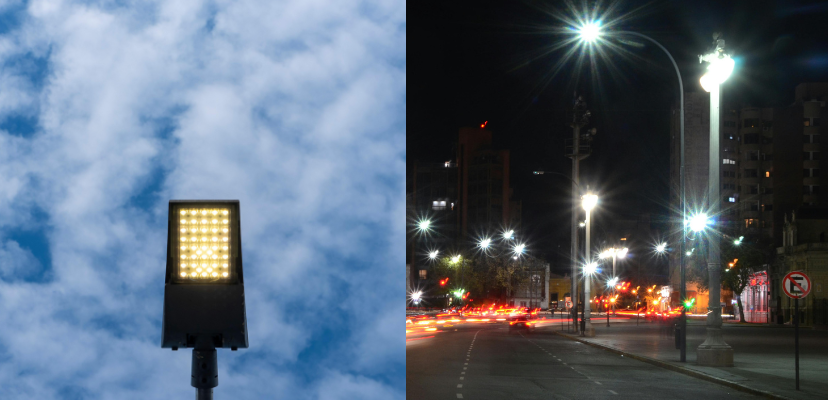
LED Lighting:
- Bright white light
- High color accuracy
- Good visibility of the environment.
In LED vs high-pressure sodium, players, drivers, and pedestrians can perceive more details. This improves safety significantly.
For example:
- Drivers are able to recognize obstacles in a quicker manner.
- Security cameras provide better shots.
- People feel more secure when walking.
3. Lifespan & Maintenance
One of the costs that people fail to pay attention to is maintenance.
Sodium Street Lights:
- Lifespan: 15,000 to 25,000 hours
- Frequent replacements required
- Light output decreases over time
LED Street Lamps:
- Lifespan: 50,000 to 100,000 hours
- Minimal maintenance
- Consistent brightness
Therefore, in a comparison between sodium lamp and LED, LEDs have a life span of 2 to 4 times.
This reduces:
- Labor costs
- Replacement costs
- Downtime
4. Startup Time & Performance
Have you ever noticed how sodium street lights take a long time to fully turn on?
That is a significant shortcoming.
Sodium Lamps:
- Slow startup (5–10 minutes)
- Missing instantaneous power-up resilience.
LED Lights:
- Instant ON/OFF
- No warm-up time
This is more than meets the eye in real-life situations. Especially in:
- Smart city systems
- Motion-based lighting
- Emergency situations
5. Directional Lighting & Efficiency
Light distribution is also another major distinction between HPS and LED street lights.
Sodium Lighting:
- Gives out light everywhere.
- Requires reflectors
- Consumes resources and energies.
LED Lighting:
- Directional light output
- Brings light to the point of need.
- Reduces light pollution
This is much more efficient than high-pressure sodium for roads and streets.
6. Environmental Impact
In the contemporary lighting choices, cost is no longer the sole consideration.
Sodium Lamps:
- Contain hazardous materials
- Higher carbon footprint
- Less longevity because of increased waste.
LED Lighting:
- Eco-friendly
- Lower energy usage
- Reduced emissions
One of the simplest methods of cities decreasing the influence on the environment is switching to LED lighting.
7. Cost Comparison: Short-Term vs Long-Term
Many people hesitate because LEDs require a higher initial investment.
But here the fact is.
Initial Cost:
- Sodium street lights: Reduced.
- LED street lamps: Higher.
Long-Term Cost:
- LEDs are much more economical because of:
- Lower electricity bills
- Reduced maintenance
- Longer lifespan
In the high-pressure sodium vs LED debate, therefore, LEDs are obviously the winner in terms of total cost of ownership.
LED vs Sodium Street Lights: Quick Comparison Table
To provide a quick, no-mix-up response to the question “Are LED street lamps better than high-pressure sodium lamps?”, this table will do the job.
| Feature | LED Street Lamps | Sodium Street Lights (HPS) |
| Energy Consumption | 50–70% lower energy use | High energy consumption |
| Brightness Efficiency | High lumens per watt | Lower efficiency |
| Light Color | Bright white light | Yellow/orange glow |
| Visibility | Excellent (clear details) | Poor (low color clarity) |
| Lifespan | 50,000–100,000 hours | 15,000–25,000 hours |
| Maintenance | Very low | Frequent replacements |
| Startup Time | Instant ON | Slow warm-up (5–10 mins) |
| Direction Control | Focused, directional light | Scattered light |
| Environmental Impact | Eco-friendly | Contains harmful materials |
| Long-Term Cost | Low (high savings) | High (energy + maintenanc) |
250W HPS LED Equivalent (Quick Guide)
This is the most common question when upgrading.
- 250W HPS ≈ 100W–120W LED
- 400W HPS ≈ 150W–200W LED
This conversion is useful in case of replacing the old sodium street lights systems with the modern LED systems.
Low-Pressure Sodium vs High-Pressure Sodium
Although it is not commonly used nowadays, it is worth knowing the distinction.
Low-Pressure Sodium Lights:
- Extremely energy efficient
- Extremely low visibility
- Inapplicable to the majority of contemporary applications.
High-Pressure Sodium Lights:
- Better brightness
- Poor color rendering still.
- Very popular in street lighting.
They are inferior in almost all aspects compared to both.
Where Sodium Lights Still Exist
Although this has changed, sodium street lights continue to be used in parts:
- Older infrastructure
- Budget-limited projects
- Remote areas
Nevertheless, the majority of the cities are replacing them with LED systems.
Why Cities Are Switching to LED
The Reason Cities are converting to LED is that governments all over the world are modernizing their lighting systems.
Major Reasons include:
- Energy savings
- Lower maintenance costs
- Better public safety
- Smart lighting compatibility
The replacement of sodium lamps with LED is not a fad. It is a long-term plan.
Which One Should You Choose?
Should you be choosing between high-pressure sodium lights and LED, the answer is simple;
Select the LED when you would like:
- Longer lifespan
- Minimal maintenance
- Decreased electricity bills
- Increased visibility and safety.
- Modern, future-ready lighting
Choose Sodium (only if):
- The budget is extremely limited
- You are working with ancient infrastructure.
In almost every modern application, LED is the better choice.
Final Thoughts: Is LED Better Than Sodium?
Yes, and not even in the same league.
When you compare LED vs high-pressure sodium, LEDs outperform in:
- Energy efficiency
- Light quality
- Lifespan
- Environmental impact
- Long-term cost
The sole benefit sodium lights offer is a lower initial cost. However, in the long run, that benefit is lost.
Nowadays, replacing sodium street lights with LEDs is not only an upgrade but also a clever investment.
Need to Upgrade Your Street Lighting?
When you are about to replace your old sodium lights or install a new system, it is all about choosing the appropriate solution.
Our LED lights are high-performance and are offered to solve:
- Streets and highways
- Outdoor spaces
- Commercial projects
- Industrial applications
Our team is available to provide you with the advice you need on 250W HPS LED equivalents, the selection of appropriate fixtures, or the entire upgrade from HPS to LED street lights. Call us now, and we will assist you in developing an energy-saving, better visibility, and long-life lighting system.