
















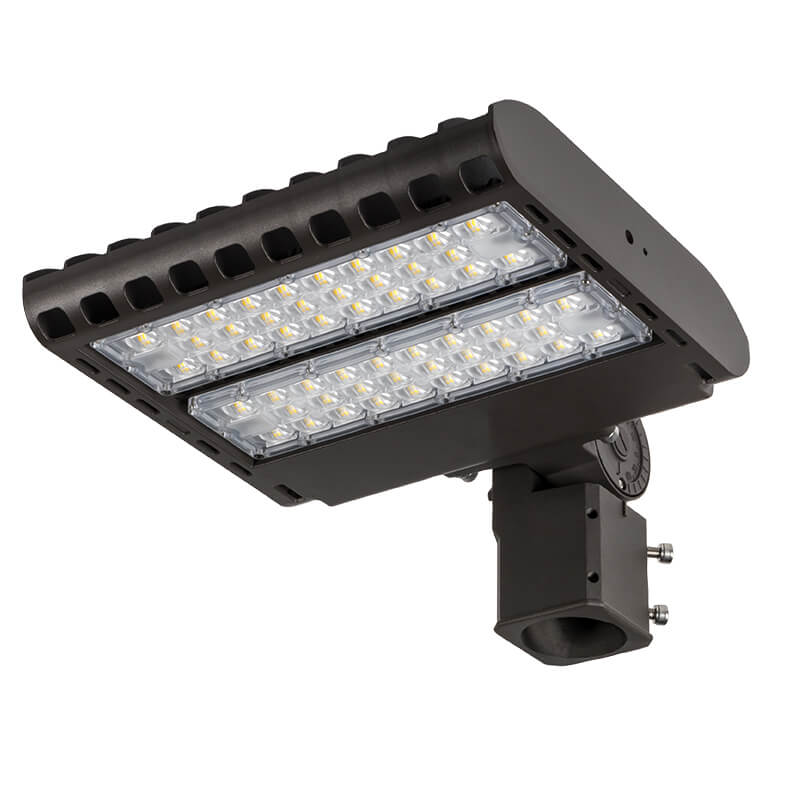











Conventional street lighting systems were performed with fixed height ranges that were not very flexible. The high-pressure sodium and metal halide lighting technologies used in the past were taller in order to spread the light more widely. They were however costly and used higher energy with high maintenance costs.
As the trend is shifted to LED street lighting, pole height has been altered. The contemporary lighting design aims at efficiency, consistency and the optimal pole height, and not merely placing higher poles.
It is necessary to know the proper height of the street lights. It has a direct effect on the quality of illumination, safety, cost of installation and long term performance.
In this guide, we break down everything you need to know about street light pole height, design factors, and real-world applications.
Street Light Pole Height (Standard Range)
Height of street light is dependent on the application, however, the general standards are:
- 6–9 meters (2030 ft: Residential streets): Residential streets.
- 812 meters (2640 ft: Urban roads and commercial roads).
- 12–15 meters (40–50 ft): Highways and major roads
- 3–6 meters (10–20 ft): Pathways and parks
Lighting design is one of the areas where these ranges are used extensively to maintain adequate light coverage and consistency.
Street Light Height Design Considerations
Good street lighting is not a question of having poles. It demands a conflict-free design methodology.
1. Pole Height and Light Distribution
The height of the pole defines the way light is distributed on the surface.
- The wider beam coverage is offered by higher poles.
- Poles are lower and give narrow areas of light.
An example of this is that highway lighting involves taller poles to minimize the installations whereas residential streets involve shorter poles to control lighting.
Improper height will lead to:
- Dark spots
- Uneven lighting
- Brightness in some parts is too much.
2. Pole Spacing and Height Ratio
There is a direct relationship between height and spacing.
- Shorter poles have to be placed closer.
- Taller poles permit higher distances of spacing.
One of the most frequent design rules is:
Spacing = 3 to 4 times the pole height
This guarantees the consistency of lighting without shadows.
3. Mounting Height and Glare Control
Glare is a major issue in street lighting.
The lighting which is low-mounted may be a source of discomfort.
Mounted lights are high and hence fewer glare but can be less bright.
Correct mounting height will guarantee:
- Better road safety
- Comfortable visibility
- Less eye strain on the drivers.
4. Road Width and Application Type
The pole height will never be chosen without considering the road width.
- Narrow roads lead to lower poles.
- Broad streets to bigger poles.
In the case of highways, poles should be higher to ensure that several lanes are covered effectively.
Street Light Height for Different Applications
The lighting needs of each environment are different.
Residential Street Lighting
- Height: 6–9 meters
- Specialization: Safety and comfort.
- Application: Housing societies, small roads
The lighting is less intense and more diffused to avoid being distracting.
Urban and Commercial Roads
- Height: 8–12 meters
- Use: Street roads, commercial areas.
- Target: Visibility and movement of traffic.
These places demand equal illumination and a broader scope.
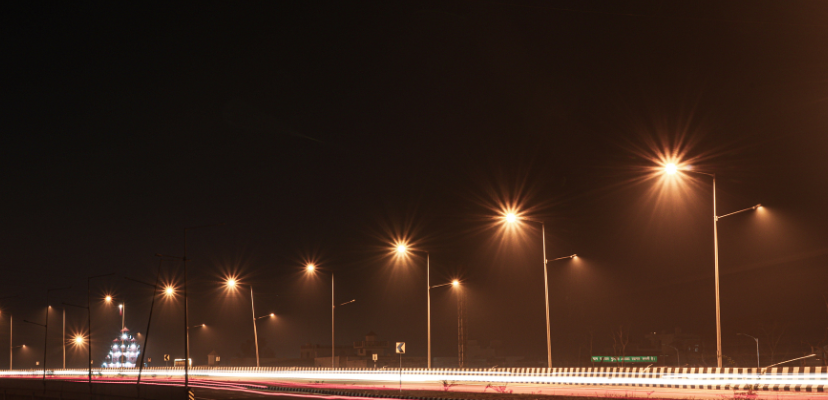
Highway Lighting
- Height: 12–15 meters
- Application: Expressways, highways
- Focus: Long-distance visibility
The number of poles is reduced, even though the areas they cover are larger.
Parking Lot Lighting
- Height: 5–12 meters
- Concentration: Stability and exposure.
Even lighting should be used to prevent shadows.
Decorative and Landscape Lighting
- Height: 3–6 meters
- Application: Parks, walkways
- Concentration: Decor and atmosphere.
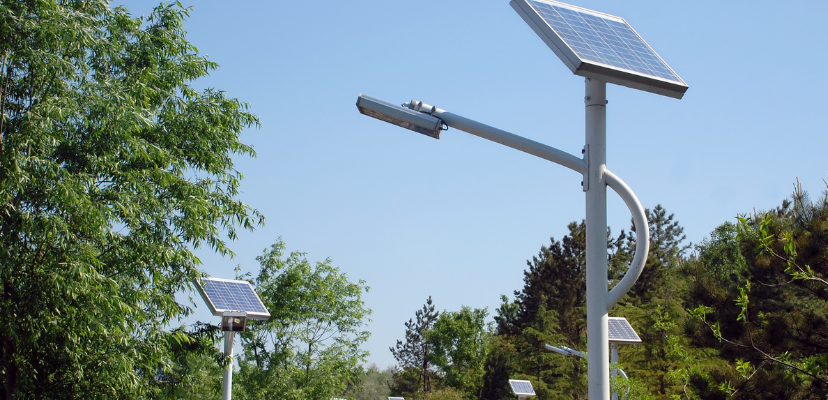
Effects of LED Technology on Street Light Height
Conventional lighting used more poles because it was not efficient.
LED technology has changed this:
- Increased lumen per watt.
- Better directional lighting
- Reduced energy consumption
This allows:
- Reduced height of the pole with increased brightness.
- Improved uniformity
- Reduced installation costs
LED lighting used in the streets can save 50-70 per cent of energy used in traditional systems.
Lighting Performance Factors to Consider
Performance Factors to consider in lighting.
In choosing pole height, you have to take into account:
A. Lux Level (Brightness Requirement)
Lux determines the amount of light that falls to the ground.
Residential roads → 10–20 lux
Urban roads → 20–50 lux
Highways → 50+ lux
Proper height ensures the required lux level is achieved.
2. Uniformity Ratio
Lighting must be well distributed.
Do not use bright points and shadows.
Maintain consistent illumination
Inconsistency of uniformity impacts visibility and safety.
3. Beam Angle of Fixtures.
The angle of the beam influences the light dispersion.
- Narrow beam = higher poles.
- Broad beam = fewer long poles.
It is important to match the beam angle and pole height.
4. Environmental Conditions
Low poles might be required in foggy areas.
The high poles are advantageous in open areas.
4. Environmental Conditions
- Foggy areas may need lower poles
- Open areas benefit from higher poles
Common Mistakes in Street Light Height Selection
Lack of proper planning is a cause of many projects.
- Selecting height on a cost basis only.
- Ignoring pole spacing
- Equal height of all areas.
Failure to take into account the LED beam angles.
Such errors result in:
- Poor lighting performance
- Higher long-term costs
- Increased maintenance
Street Light Pole vs Lamp Post
The two terms are used interchangeably.
Street Light Pole:
- Height: 6–15 meters
- Applied in roads and highways.
- Designed for performance
Lamp Post:
- Height: 3–6 meters
- Applied on footways and walkways.
- Designed for aesthetics
Advantages of Maximized Height of Street Lights.
The right height has several benefits:
1. Improved Safety
Increased visibility lowers incident rates and increases security.
2. Lower Installation Cost
There is reduced height selection and fewer poles used.
3. Energy Efficiency
Optimized design reduces power consumption.
4. Reduced Maintenance
The correct height reduces stress on lighting fixtures.
5. Better User Experience
Light that is comfortable enhances the general quality of the environment.
How to Choose the Right Street Light Height?
In choosing poles that will be used as street lights, take into consideration:
- Road width and area size.
- Brightness (lux level) required.
- Pole spacing
- Type of lighting (LED recommended)
- Long-term cost and budget.
A good system will strike a balance between all these.
Looking for the Right Street Lighting Solution?
One of the most important aspects of lighting design is street light height. It influences visibility and safety as well as cost and efficiency.
Modern LED technology enables the realization of an improved lighting performance with optimized pole heights. Television poles should be chosen not just by height; the emphasis should be on intelligent design, good spacing, and effective indoor lighting systems.
Pole height is just one of the factors you need to consider when planning a lighting project.
We provide:
- Light poles on the streets vary in height.
- LED lighting systems are highly efficient.
- Full lighting design assistance.
Our staff assists you in selecting the optimal height, distance, and lighting installation to achieve the highest performance and value.