















Troffer vs Flat Panel Lights: Design, Light Output, Efficiency, Cost and Uses
Troffer lights and flat panel lights serve the same core purpose of delivering uniform commercial illumination, yet the two fixture types differ significantly in physical construction, light distribution, energy efficiency, glare control, installation flexibility, maintenance demand, lifespan performance, and long-term operating cost.
Troffers rely on deeper recessed housings designed for suspended grid ceilings and high ambient output, while flat panels use ultra-slim LED architectures that deliver lower glare, higher lumens per watt, flexible mounting options, and reduced maintenance.
Selection between troffers and flat panels depends on ceiling system, visual comfort requirements, wattage and lumen targets, control integration, budget structure, and the performance expectations of offices, healthcare spaces, educational facilities, retail interiors, and institutional buildings across the United States.
What Are Troffer Lights and How Do They Work?
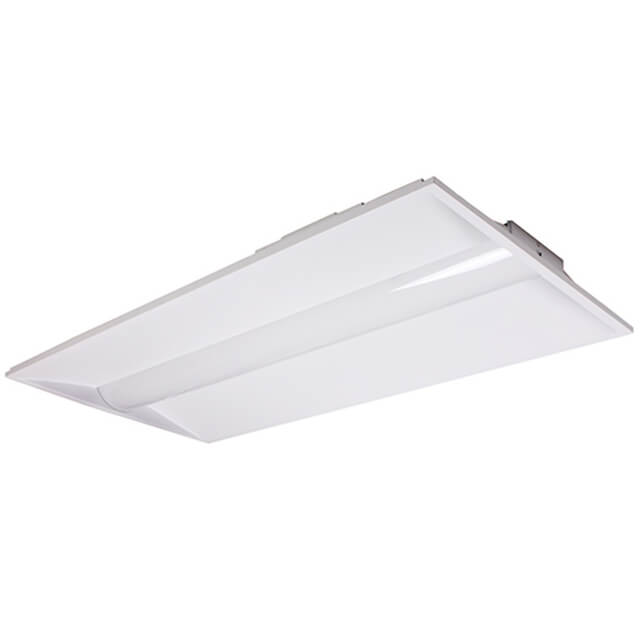
Troffer lights are recessed ceiling luminaires that produce uniform ambient illumination by distributing light from LED or fluorescent sources through lenses or diffusers within suspended grid ceilings, and troffer lights work by spreading photometric output across large interior areas to reduce glare and shadowing.
What Are Flat Panel Lights and How Are They Different?
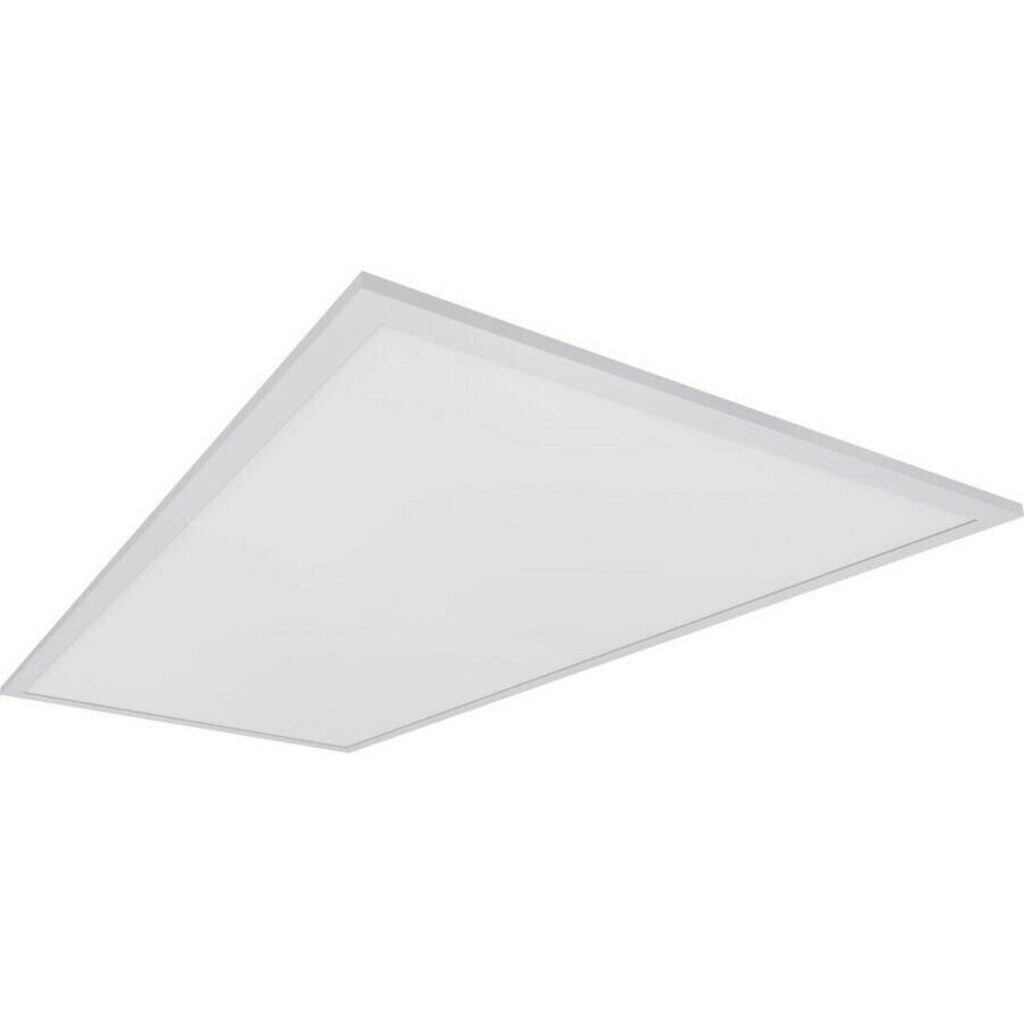
Flat panel lights are slim-profile LED luminaires designed for surface-mount, recessed, or suspended installations, and flat panel lights differ from troffer lights through edge-lit or back-lit architectures, lower fixture depth, reduced glare ratings, and higher efficacy in modern commercial interiors.
What Is the Difference Between Troffer Lights and Flat Panel Lights?
| Category | Troffer Lights | Flat Panel Lights |
| Fixture Profile | Deep recessed housing exceeding 3 inches | Ultra-slim profile typically below 1.5 inches |
| Ceiling Compatibility | Suspended T-bar grid ceilings only | Recessed, surface-mounted, and suspended ceilings |
| Common Sizes | 2×2 ft, 2×4 ft | 1×4 ft, 2×2 ft, 2×4 ft, architectural sizes |
| Light Distribution | Volumetric ambient illumination | Uniform planar illumination |
| Typical Lumen Output | 4,000–7,000 lumens (2×4 fixtures) | 3,600–5,200 lumens (2×4 fixtures) |
| Luminous Efficacy | 100–115 lumens per watt | 120+ lumens per watt |
| Glare Performance | Moderate glare control via diffusers or louvers | Low glare, often UGR <19 |
| Color Temperature Options | 3000K–5000K | 3000K–5000K, often selectable |
| Lighting Controls | Dimming, sensors, external control modules | Dimming, sensors, control-ready drivers |
| Installation Complexity | Grid placement plus independent support | Flexible mounting with reduced ceiling dependency |
| Maintenance Requirement | Moderate, requires optical component access | Low, sealed optical surfaces |
| Typical Applications | Schools, hospitals, government buildings | Offices, retail, clinics, modern interiors |
| Upfront Fixture Cost | Lower initial cost | Higher initial cost |
| Total Cost of Ownership | Moderate due to higher energy use | Lower due to efficiency and reduced maintenance |
The difference between troffer lights and flat panel lights is defined by housing depth, optical method, mounting flexibility, glare control, energy efficacy, and retrofit scope, where troffer lights rely on recessed volumetric housings for grid ceilings and flat panel lights rely on ultra-slim LED assemblies for flexible commercial ceilings in the United States.
Structural Design
Troffer lights use deep rectangular housings exceeding 3 inches, while flat panel lights use slim frames below 1.5 inches. Troffer housings accommodate optical chambers, thermal spacing, and louvers, whereas flat panel frames prioritize shallow plenums and architectural ceiling compatibility.
Optical Architecture
Troffer lights control light through diffusers or parabolic louvers, while flat panel lights distribute light through edge-lit or back-lit LED arrays. Troffer optics emphasize cutoff angles and volumetric spread, whereas flat panel optics emphasize uniform luminance and reduced pixel visibility.
Installation Configuration
Troffer lights install only within suspended T-bar ceiling grids, while flat panel lights support recessed, surface-mounted, and suspended installations. Troffer installations require ceiling cavities and grid alignment, whereas flat panel installations adapt to drywall ceilings and low-plenum environments.
Energy Performance
Flat panel lights deliver higher luminous efficacy than troffer lights in LED configurations. Flat panel luminaires commonly exceed 120 lumens per watt, whereas LED troffer luminaires average between 100 and 115 lumens per watt due to deeper housing losses.
Glare Control and Visual Comfort
Flat panel lights achieve lower glare ratings than troffer lights through uniform emitting surfaces. Flat panel luminaires frequently meet Unified Glare Rating values below 19 for office environments, whereas troffer luminaires rely on shielding geometry to manage glare.
Ceiling System Compatibility
Troffer lights align with legacy drop ceiling systems, while flat panel lights align with modern architectural ceilings. Troffer fixtures match standardized 2×2 and 2×4 grid modules, whereas flat panel lights integrate with drywall, open ceilings, and mixed commercial interiors.
Maintenance and Servicing
Flat panel lights reduce maintenance complexity compared to troffer lights. Flat panel luminaires use sealed LED assemblies, whereas troffer luminaires require diffuser or louver removal for internal access during servicing.
Retrofit and Modernization
Flat panel lights provide broader retrofit flexibility than troffer lights. Flat panel luminaires support fluorescent troffer conversions, surface-mount retrofits, and suspended replacements, whereas troffer luminaires remain restricted to grid ceiling upgrades.
Application Environments
Troffer lights dominate institutional buildings, while flat panel lights dominate contemporary commercial interiors. Troffer lighting appears frequently in schools and hospitals, whereas flat panel lighting appears widely in offices, retail spaces, and healthcare clinics.
Cost and Infrastructure Dependency
Troffer lights require higher ceiling infrastructure investment than flat panel lights. Troffer systems depend on grid ceilings and plenum depth, whereas flat panel systems reduce structural dependency and installation labor complexity.
What Are the Pros and Cons of Troffer Lights?
Troffer lights provide uniform ambient illumination, standardized ceiling integration, and proven performance in institutional buildings, while troffer lights present constraints related to ceiling dependency, fixture depth, glare control limits, and reduced adaptability compared with modern flat panel luminaires in United States commercial environments.
Pros of Troffer Lights
Troffer lights deliver reliable, wide-area illumination within suspended grid ceiling systems. Troffer luminaires align with standardized 2×2 and 2×4 ceiling modules, support multiple optical options, and maintain consistent light distribution across offices, schools, hospitals, and government facilities.
The advantages of troffer lights are given below:
- Provide uniform ambient lighting across large floor plates
- Integrate directly with suspended T-bar ceiling grids
- Support diffuser and parabolic louver optical control
- Maintain compatibility with fluorescent-to-LED retrofits
- Demonstrate long operational lifespan in institutional use
Cons of Troffer Lights
Troffer lights impose structural and performance limitations in modern commercial lighting design. Troffer housings require ceiling plenum depth, restrict mounting flexibility, and exhibit higher glare potential and lower efficacy compared with planar LED flat panel systems.
The disadvantages of troffer lights are given below:
- Require suspended grid ceilings and ceiling cavity clearance
- Limit installation outside traditional drop ceiling systems
- Produce higher glare relative to uniform planar luminaires
- Deliver lower lumens-per-watt than modern flat panel lights
- Increase maintenance effort due to internal optical assemblies
What Are the Pros and Cons of Flat Panel Lights?
Flat panel lights provide high energy efficiency, low glare performance, and flexible installation across modern commercial interiors, while flat panel lights present limitations related to light punch, ceiling height suitability, and higher upfront cost in premium specifications within United States lighting projects.
Pros of Flat Panel Lights
Flat panel lights deliver uniform illumination with high visual comfort and installation flexibility. Flat panel luminaires use planar LED architectures that support low-plenum ceilings, reduce glare, and improve energy performance across offices, retail spaces, healthcare clinics, and educational buildings.
The advantages of flat panel lights are given below:
- Achieve high luminous efficacy exceeding 120 lumens per watt
- Maintain ultra-slim profiles below 1.5 inches for low-plenum ceilings
- Support recessed, surface-mounted, and suspended installations
- Produce low Unified Glare Rating values below 19 for office use
- Reduce maintenance through sealed LED assemblies
Cons of Flat Panel Lights
Flat panel lights present performance and application constraints in certain environments. Flat panel luminaires deliver less vertical light distribution, show reduced effectiveness in high-ceiling spaces, and introduce higher initial costs for advanced optical and driver configurations.
The disadvantages of flat panel lights are given below:
- Deliver lower vertical illumination compared to volumetric troffer optics
- Perform less effectively in ceilings exceeding standard commercial heights
- Require higher upfront investment for premium glare-control designs
- Offer limited optical customization compared to louvered troffer systems
- Depend on driver quality for long-term performance stability
What Are the Key Physical Differences Between Troffers and Flat Panels?
The key physical differences between troffer lights and flat panel lights involve housing depth, frame construction, weight distribution, optical layout, and ceiling interface, where troffers use deep recessed metal housings and flat panels use ultra-thin LED frames designed for flexible commercial ceiling systems in the United States.
Housing Depth and Form Factor
Troffer lights use deep rectangular housings exceeding 3 inches, while flat panel lights use slim profiles below 1.5 inches. Troffer depth supports volumetric optical chambers, while flat panel depth supports shallow plenums and architectural ceiling constraints.
Frame and Material Construction
Troffer lights use rigid steel housings, while flat panel lights use lightweight aluminum or composite frames. Troffer construction supports long-term institutional durability, while flat panel construction reduces fixture weight and simplifies handling during installation.
Optical Surface Structure
Troffer lights emit light through recessed diffusers or louvers, while flat panel lights emit light through a flat luminous surface. Troffer optics create depth-based light control, while flat panel optics create uniform planar luminance.
Weight and Load Distribution
Troffer lights weigh more than flat panel lights due to metal housings and internal components. Troffer fixtures impose higher ceiling grid load requirements, while flat panel fixtures distribute lower weight across mounting points.
Ceiling Interface and Fit
Troffer lights fit exclusively within suspended T-bar ceiling grids, while flat panel lights adapt to recessed, surface-mounted, and suspended ceiling interfaces. Troffer dimensions match 2×2 and 2×4 grid modules, while flat panel dimensions support broader architectural integration.
Thermal Management Design
Troffer lights dissipate heat through internal air volume and metal housings, while flat panel lights dissipate heat through rear-mounted heat sinks. Troffer thermal design relies on enclosure space, while flat panel thermal design relies on conductive materials and surface area.
What Sizes Do Troffers and Flat Panels Come In?
Troffers and flat panel lights are manufactured in standardized commercial dimensions aligned with ceiling systems, where troffers follow fixed suspended-grid modules and flat panels follow both grid-based and architectural sizing formats used across United States commercial buildings.
Troffer Light Sizes
Troffer lights are produced in fixed rectangular dimensions designed to fit suspended T-bar ceiling grids. Troffer sizing follows ANSI ceiling module standards used in offices, schools, hospitals, and government facilities.
The standard troffer sizes are given below:
- 2×2 feet, with actual fixture dimensions near 23.75×23.75 inches
- 2×4 feet, with actual fixture dimensions near 23.75×47.75 inches
Flat Panel Light Sizes
Flat panel lights are manufactured in both grid-compatible and flexible architectural dimensions. Flat panel sizing supports recessed, surface-mounted, and suspended installations across modern commercial interiors.
The standard flat panel sizes are given below:
- 1×4 feet
- 2×2 feet
- 2×4 feet
Specialty Flat Panel Sizes
Flat panel lights are also available in non-standard dimensions for architectural and space-specific layouts. Specialty sizing supports design flexibility and retrofit adaptation beyond traditional ceiling grids.
The specialty flat panel sizes are given below:
- 1×2 feet
- 12×12 inches
- 12×24 inches
- 24×36 inches
How Do Lumens and Light Output Compare Between Troffers and Flat Panels?
Lumens and light output differ between troffers and flat panel lights based on optical depth, LED distribution method, and application intent, where troffers deliver higher total lumen packages for wide-area illumination and flat panels deliver higher usable light efficiency with lower glare in commercial interiors across the United States.
Lumen Output Comparison
Troffer lights produce higher total lumen output than flat panel lights in comparable sizes. Standard 2×4 LED troffers deliver between 4,000 and 7,000 lumens, while 2×4 LED flat panels typically deliver between 3,600 and 5,200 lumens depending on driver and diode density.
Light Distribution Characteristics
Troffer lights distribute light volumetrically, while flat panel lights distribute light planarly. Troffer housings project light downward and outward through diffusers or louvers, whereas flat panel lights emit light evenly across a flat luminous surface with controlled beam spread.
Usable Light and Visual Efficiency
Flat panel lights deliver higher usable light efficiency despite lower total lumen output. Flat panel luminaires convert a greater percentage of emitted lumens into task-level illumination due to reduced optical losses and uniform luminance, especially in office environments.
Efficacy Comparison
Flat panel lights achieve higher lumens-per-watt values than troffer lights. Flat panel luminaires commonly exceed 120 lumens per watt, while LED troffers average between 100 and 115 lumens per watt due to deeper housings and multi-layer optical systems.
Application-Based Output Suitability
Troffer lights suit high-lumen ambient lighting requirements, while flat panel lights suit visually comfortable task-oriented environments. Troffers perform well in large institutional spaces, while flat panels perform well in offices, healthcare clinics, and retail interiors prioritizing glare control and visual comfort.
What Wattage Options Are Available for Each Fixture Type?
Wattage options for troffer lights and flat panel lights differ based on fixture depth, lumen targets, and optical efficiency, where troffer lights operate at higher wattage ranges for volumetric output and flat panel lights operate at lower wattage ranges due to higher LED efficacy in United States commercial lighting systems.
Troffer Light Wattage Options
Troffer lights use moderate-to-high wattage ranges to achieve wide-area ambient illumination in grid ceiling systems. Troffer wattage correlates with fixture size, lumen package, and optical configuration.
The standard troffer wattage options are given below:
- 2×2 troffer lights: 25–40 watts
- 2×4 troffer lights: 35–60 watts
- High-output troffer lights: 60–75 watts for institutional applications
Flat Panel Light Wattage Options
Flat panel lights use lower wattage ranges due to higher lumens-per-watt performance. Flat panel wattage aligns with planar LED distribution and reduced optical losses.
The standard flat panel wattage options are given below:
- 2×2 flat panel lights: 20–35 watts
- 2×4 flat panel lights: 30–50 watts
- Low-wattage flat panels: 15–25 watts for energy-focused installations
Wattage Efficiency Comparison
Flat panel lights achieve required illumination levels at lower wattage than troffer lights. Flat panel luminaires commonly exceed 120 lumens per watt, while LED troffer luminaires typically operate between 100 and 115 lumens per watt.
Application-Based Wattage Selection
Troffer lights suit higher wattage requirements for large-volume spaces, while flat panel lights suit lower wattage requirements for visually efficient environments. Troffer wattage supports institutional ceilings, while flat panel wattage supports offices, healthcare clinics, and retail interiors prioritizing energy efficiency.
How Does Color Temperature Differ Between Troffers and Flat Panels?
Color temperature does not differ inherently between troffer lights and flat panel lights, since both fixture types support identical correlated color temperature ranges, but practical differences appear in default specifications, tuning availability, and visual uniformity across United States commercial lighting applications.
Supported Color Temperature Ranges
Troffer lights and flat panel lights support the same standardized commercial color temperature values. Fixture availability aligns with ANSI white-light specifications used in offices, schools, healthcare facilities, and retail environments.
The standard color temperature options are given below:
- 3000K for warm-white commercial interiors
- 3500K for neutral-white professional environments
- 4000K for offices and educational buildings
- 5000K for task-focused and clinical spaces
Specification and Usage Differences
Troffer lights are more frequently specified at higher color temperatures than flat panel lights. Troffer installations in institutional buildings commonly use 4000K–5000K outputs, while flat panel installations in offices and retail spaces commonly use 3500K–4000K outputs.
Tunable and Selectable CCT Differences
Flat panel lights more commonly include selectable or tunable CCT functionality than troffer lights. Flat panel luminaires frequently integrate multi-CCT switches or tunable white drivers, while troffer luminaires more often rely on fixed-CCT configurations.
Visual Uniformity Differences
Flat panel lights present color temperature with greater perceived uniformity than troffer lights. Flat panel planar emission minimizes color variation across the luminous surface, while troffer depth and optical layering introduce minor tonal variance.
Design and Application Implications
Color temperature selection depends on application intent rather than fixture category. Troffer lights and flat panel lights deliver equivalent Kelvin outputs, while fixture architecture influences visual perception, specification flexibility, and consistency across ceiling layouts.
How Do Troffer Lights and Flat Panel Lights Differ in Design?
Troffer lights and flat panel lights differ in design through housing depth, optical structure, frame construction, and light-emission geometry, where troffer lights use deep recessed metal enclosures with volumetric optics and flat panel lights use ultra-thin LED frames with planar light-emitting surfaces in United States commercial lighting systems.
Housing and Form Factor Design
Troffer lights use deep rectangular housings exceeding 3 inches, while flat panel lights use slim profiles typically below 1.5 inches. Troffer depth supports internal optical chambers and airflow, while flat panel depth supports low-plenum and architectural ceiling constraints.
Optical System Design
Troffer lights rely on diffusers or parabolic louvers inside recessed cavities, while flat panel lights rely on edge-lit or back-lit LED boards behind a flat lens. Troffer optics shape light through depth-based control, while flat panel optics emphasize uniform luminance across a single plane.
Frame and Material Design
Troffer lights use rigid steel housings, while flat panel lights use lightweight aluminum or composite frames. Troffer construction prioritizes institutional durability, while flat panel construction prioritizes reduced weight and modern ceiling integration.
Light Emission Geometry
Troffer lights emit light volumetrically from recessed apertures, while flat panel lights emit light planarly from a luminous surface. Troffer geometry creates directional cutoff and depth perception, while flat panel geometry creates even light distribution with reduced glare.
Ceiling Integration Design
Troffer lights are designed exclusively for suspended T-bar ceilings, while flat panel lights are designed for recessed, surface-mounted, and suspended ceiling systems. Troffer design aligns with legacy grid ceilings, while flat panel design aligns with contemporary architectural interiors.
How Are Troffer Lights Installed?
Troffer light installation uses a recessed ceiling method that places a rectangular luminaire into a suspended T-bar grid, connects line-voltage wiring through an integrated junction box, and secures the fixture with independent mechanical supports in accordance with United States commercial electrical and building regulations.
Ceiling Grid Integration
Installation starts by seating the fixture inside a standard 2×2 or 2×4 suspended ceiling opening. The fixture flange rests on T-bar rails, and adjacent ceiling tiles are cut or replaced to preserve ceiling uniformity and load balance.
Electrical Connection
Electrical power connects through a factory-mounted junction box attached to the housing. Branch-circuit conductors route through the ceiling plenum, and grounding and termination follow National Electrical Code requirements for commercial luminaires.
Structural Support
Independent mechanical supports anchor the fixture to the building structure. Safety wires or support chains transfer fixture weight away from ceiling grid rails to prevent deflection and long-term structural stress.
Optical Component Installation
Diffusers, lenses, or parabolic louvers install after fixture placement. Optical components attach using hinged or snap-in mechanisms to complete light distribution and glare control.
Retrofit Installation Use
Retrofit installation reuses existing fluorescent ceiling openings and wiring layouts. LED troffer replacements align with legacy grid dimensions, reducing labor time and minimizing ceiling modifications during commercial lighting upgrades.
How Are Flat Panel Lights Installed?
Flat panel light installation uses recessed, surface-mounted, or suspended methods that connect low-profile LED luminaires to ceiling structures, complete line-voltage wiring through external or remote drivers, and secure fixtures using mounting frames or suspension hardware in United States commercial buildings.
Recessed Ceiling Installation
Recessed installation places the panel into a ceiling opening using a mounting frame or grid adapter. The fixture sits flush with drywall or grid ceilings, and drivers are positioned above the ceiling plane to maintain a low-profile appearance.
Surface-Mounted Installation
Surface-mounted installation attaches the panel directly to the ceiling surface. Mounting brackets or backplates secure the fixture to concrete, drywall, or solid ceilings, enabling installation where plenum space is unavailable.
Suspended Installation
Suspended installation hangs the panel below the ceiling using aircraft cables or rod systems. Suspension height is adjustable, allowing consistent illumination in spaces with high ceilings or open architectural designs.
Electrical Connection
Power connection routes through an external or integrated driver connected to line voltage. Branch-circuit wiring follows National Electrical Code requirements, and drivers mount remotely or within surface housings based on installation type.
Retrofit Installation Use
Retrofit installation adapts panels to replace fluorescent troffers or surface fixtures. Conversion frames and mounting kits enable installation without major ceiling modification, reducing labor time during commercial lighting upgrades.
Which Provides Better Light Quality?
Flat panel lights provide better light quality than troffer lights due to lower glare, higher visual uniformity, and improved usable illumination, while troffer lights prioritize high-volume ambient output over visual comfort in United States commercial lighting environments.
Visual Comfort and Glare Control
Flat panel lights deliver superior visual comfort through uniform planar emission. Flat panel luminaires commonly achieve Unified Glare Rating values below 19, while troffer luminaires rely on depth-based shielding that produces higher glare in direct viewing angles.
Light Uniformity and Consistency
Flat panel lights produce more consistent light distribution across work surfaces. Planar LED emission minimizes hot spots and shadowing, while troffer optics create luminance variation due to recessed chambers and diffuser layering.
Usable Illumination Efficiency
Flat panel lights convert a higher percentage of emitted lumens into task-level illumination. Reduced optical losses improve perceived brightness at lower wattage, while troffer systems lose output through multi-layer optical assemblies.
Application-Based Light Quality
Flat panel lights suit offices and task-oriented environments, while troffer lights suit large ambient lighting zones. Flat panels enhance screen-based work and visual comfort, while troffers support wide-area illumination in institutional interiors.
Are LED Troffers More Energy Efficient Than Flat Panels?
LED flat panels are more energy efficient than LED troffers because flat panels deliver higher lumens per watt, lower optical losses, and higher usable illumination at the task level, while LED troffers consume more power due to deeper housings and multi-layer optical assemblies in United States commercial buildings.
Energy Efficiency Comparison
Flat panel lights achieve higher luminous efficacy than LED troffers. Flat panel luminaires commonly exceed 120 lumens per watt, while LED troffer luminaires typically operate between 100 and 115 lumens per watt for equivalent fixture sizes.
Optical Loss Impact
LED troffers experience greater optical losses than flat panels. Recessed housings, diffusers, and louvers reduce delivered light efficiency, while flat panels emit light directly from planar LED surfaces with fewer transmission losses.
Power Consumption at Equal Light Levels
Flat panels require lower wattage to achieve equivalent illuminance levels. Flat panel systems achieve target foot-candle levels using fewer watts due to uniform luminance and higher task-plane efficiency.
Energy Use in Commercial Applications
Flat panels reduce total lighting energy consumption in modern offices and retail environments. LED troffers remain efficient compared to fluorescent systems, but flat panels outperform troffers in energy-focused commercial lighting designs.
Do Troffers and Flat Panels Support Lighting Controls?
Troffer lights and flat panel lights both support advanced lighting controls, including dimming, occupancy sensing, daylight harvesting, and networked control systems, with flat panel lights more frequently specified with integrated control-ready drivers in United States commercial lighting installations.
Dimming Control Support
Both fixture types support 0–10V dimming and digital dimming protocols. Troffers and flat panels integrate dimmable LED drivers that allow continuous light level adjustment for energy management and visual comfort.
Occupancy and Vacancy Sensor Support
Both fixture types support occupancy and vacancy sensing through fixture-level or room-level controls. Sensors reduce energy use by automatically adjusting light output based on space utilization in offices, classrooms, and commercial interiors.
Daylight Harvesting Capability
Troffers and flat panels support daylight-responsive lighting controls. Photocell integration enables automatic dimming in response to available natural light, reducing electrical lighting demand near windows and skylights.
Networked and Smart Control Compatibility
Flat panel lights more commonly ship with control-ready or integrated smart drivers than troffer lights. Flat panels frequently support wireless protocols such as Bluetooth Mesh and Zigbee, while troffers often require external control modules depending on specification.
Code and Compliance Integration
Both fixture types support control strategies required by modern energy codes. Troffer and flat panel systems integrate with control schemes mandated by ASHRAE 90.1 and state-level commercial energy regulations across the United States.
Where Are Troffer Lights Commonly Used?
Troffer lights are commonly used in institutional and commercial buildings with suspended grid ceilings where uniform ambient illumination, standardized layouts, and wide-area lighting coverage are required for daily operations across the United States.
Office Buildings
Office buildings use troffer lights to provide consistent overhead illumination across open-plan workspaces and enclosed offices. Suspended ceiling grids and large floor plates support uniform light distribution and efficient lighting layouts.
Educational Facilities
Educational facilities install troffer lights in classrooms, corridors, libraries, and lecture halls. Grid ceiling systems and long operating hours align with troffer lighting for visual consistency and durability.
Healthcare Facilities
Healthcare facilities rely on troffer lights for ambient lighting in patient rooms, corridors, and non-critical clinical areas. Recessed installation supports clean ceiling planes and controlled illumination levels.
Government and Municipal Buildings
Government buildings use troffer lights to standardize lighting across administrative offices and public service areas. Uniform ceiling systems and regulatory compliance requirements support troffer adoption.
Commercial Corridors and Common Areas
Commercial corridors and shared interior spaces use troffer lights to maintain consistent light levels across extended pathways. Wide-area illumination supports safety, navigation, and visual continuity in high-traffic environments.
Where Are Flat Panel Lights Commonly Used?
Flat panel lights are commonly used in modern commercial and professional interiors that require low-glare illumination, flexible mounting options, and compatibility with shallow or non-grid ceiling systems across the United States.
Office and Corporate Workspaces
Office environments use flat panel lights to provide uniform, low-glare illumination for screen-based work. Slim profiles and low Unified Glare Rating values support visual comfort in open offices, conference rooms, and private work areas.
Healthcare Clinics and Medical Offices
Healthcare clinics install flat panel lights to deliver consistent, visually comfortable lighting in examination rooms and administrative areas. Flush or surface-mounted installation supports clean ceiling designs and controlled brightness levels.
Retail and Commercial Spaces
Retail spaces use flat panel lights to create even illumination across sales floors and display areas. Planar light distribution reduces shadowing and enhances product visibility in commercial interiors.
Educational and Training Facilities
Educational facilities adopt flat panel lights in classrooms, libraries, and study areas. Uniform light output and energy efficiency support extended operating hours and visual consistency.
Architectural and Low-Plenum Ceilings
Architectural interiors use flat panel lights where ceiling depth is limited or grid systems are absent. Surface-mounted and suspended configurations support drywall ceilings, open ceilings, and modern interior designs.
Retrofit and Energy-Efficient Upgrades
Commercial retrofit projects use flat panel lights to replace fluorescent troffers and surface fixtures. Conversion frames and mounting kits reduce installation complexity while improving energy performance and visual comfort.
What Is the Price Difference Between Troffers and Flat Panels?
The price difference between troffer lights and flat panel lights reflects fixture construction, optical complexity, and mounting versatility, where troffer lights generally cost less upfront and flat panel lights carry higher unit pricing due to slim LED architectures and multi-mount capability in United States commercial lighting projects.
Average Fixture Price Range
Troffer lights typically cost less per unit than flat panel lights in equivalent sizes. Standard LED troffers commonly price between $60 and $120 per fixture, while comparable flat panel lights commonly price between $80 and $180 per fixture, depending on lumen output and control options.
Installation Cost Impact
Installation cost varies based on ceiling type and mounting method. Troffer installations align with existing grid ceilings and reduce ceiling modification, while flat panel installations lower labor cost in drywall or low-plenum ceilings through surface-mounted or suspended options.
Energy Cost Over Time
Flat panel lights reduce operating cost through higher energy efficiency. Flat panel luminaires commonly exceed 120 lumens per watt, while LED troffers average 100–115 lumens per watt, producing lower electricity expense across long operating hours.
Maintenance Cost Difference
Flat panel lights reduce maintenance-related expenses compared to troffer lights. Sealed LED assemblies limit component access and cleaning, while troffer designs require diffuser or louver handling during servicing.
Which Requires Less Maintenance?
Flat panel lights require less maintenance than troffer lights because flat panel designs use sealed LED assemblies, fewer removable optical components, and lower dust accumulation compared with recessed troffer housings in United States commercial lighting environments.
Component Accessibility and Cleaning
Flat panel lights reduce maintenance through sealed, single-piece optical surfaces. Smooth planar lenses limit dust buildup, while troffer lights require diffuser or louver removal for cleaning and internal access.
Internal Component Exposure
Troffer lights expose more internal components than flat panel lights. Recessed housings contain multiple optical layers and air cavities, increasing inspection and handling requirements during routine servicing.
LED and Driver Servicing
Flat panel lights simplify LED and driver servicing through modular or remote driver configurations. Troffer lights integrate drivers within recessed housings, increasing service time during component replacement.
Long-Term Maintenance Frequency
Flat panel lights demonstrate lower maintenance frequency over long operating periods. Reduced optical handling and sealed construction decrease service intervals, while troffer systems require periodic optical maintenance in high-use commercial spaces.
Operational Downtime Impact
Flat panel lights reduce operational downtime during maintenance activities. Faster access and simplified component layouts shorten service time compared with recessed troffer installations.
How Long Do LED Troffers Last Compared to Flat Panels?
LED troffers and flat panel lights deliver similar operational lifespans, typically ranging from 50,000 to 100,000 rated hours, with flat panel lights achieving longer effective service life due to lower internal heat buildup, sealed optical design, and reduced component stress in United States commercial lighting environments.
Rated Lifespan Comparison
Both fixture types are commonly rated between 50,000 and 100,000 hours at L70 lumen maintenance. Manufacturer specifications for commercial LED troffers and flat panels align within the same lifespan bands under standard operating conditions.
Thermal Management Impact
Flat panel lights experience lower thermal stress than troffer lights. Slim planar designs dissipate heat through rear-mounted heat sinks, while recessed troffer housings retain more heat within enclosed ceiling cavities.
Driver and Component Longevity
Driver lifespan influences real-world service life more than LED chips. Flat panel systems frequently use remote or easily accessible drivers, while troffer systems integrate drivers within recessed housings, increasing heat exposure and replacement complexity.
Environmental and Usage Factors
Operating hours and ceiling conditions affect lifespan outcomes. Flat panels perform more consistently in low-plenum and temperature-controlled interiors, while troffers experience reduced longevity in tightly enclosed or high-temperature ceiling environments.
Practical Service Life Outcome
Flat panel lights typically achieve longer effective service life in continuous-use commercial settings. Reduced heat accumulation and simplified component architecture extend usable lifespan beyond nominal ratings compared with recessed troffer installations.
Which Is Better for Office Lighting: Troffers or Flat Panels?
Flat panel lights are better for office lighting than troffer lights because flat panels deliver lower glare, higher visual uniformity, superior energy efficiency, and flexible mounting for modern office interiors in the United States.
Visual Comfort
Flat panels provide lower glare than troffers. Planar LED emission minimizes direct bright spots and supports Unified Glare Rating values below 19, enhancing comfort for screen-based workspaces.
Light Distribution
Flat panels produce more uniform illumination across desks and walkways. Even luminous surfaces reduce shadowing and promote consistent task-plane light levels compared with recessed troffer optics.
Energy Efficiency
Flat panels achieve higher lumens per watt than troffers. Flat panel luminaires commonly exceed 120 lumens per watt, while troffer luminaires typically operate between 100 and 115 lumens per watt, reducing electricity demand.
Ceiling Flexibility
Flat panels support recessed, surface, and suspended mounting. Versatile installation adapts to drywall ceilings and open office designs, while troffers require suspended grid ceilings.
Maintenance and Longevity
Flat panels reduce maintenance compared with troffers. Sealed LED assemblies and simplified access lower service intervals and minimize operational disruption in office environments.
How Do You Choose Between a Troffer and a Flat Panel?
Choosing between a troffer and a flat panel depends on ceiling type, lighting quality requirements, energy efficiency targets, maintenance expectations, and design flexibility, where troffers align with traditional grid ceilings and flat panels align with modern, low-glare, energy-efficient office and commercial environments in the United States.
Ceiling System Compatibility
Ceiling structure determines fixture suitability. Suspended T-bar grid ceilings align with troffer installation, while drywall, low-plenum, or open ceilings align with flat panel recessed, surface-mounted, or suspended configurations.
Light Quality and Visual Comfort Needs
Visual comfort requirements favor flat panel lighting. Flat panels deliver uniform planar illumination with lower glare, while troffers deliver volumetric ambient light suitable for large institutional interiors.
Energy Efficiency Priorities
Energy efficiency goals favor flat panel luminaires. Flat panels achieve higher lumens-per-watt performance and lower operating wattage compared with LED troffers in equivalent lumen categories.
Installation and Retrofit Constraints
Installation context influences fixture choice. Existing grid ceilings reduce installation effort for troffers, while retrofit projects without grid systems favor flat panels to minimize ceiling modification.
Maintenance and Lifecycle Considerations
Maintenance strategy affects long-term value. Flat panels reduce servicing frequency through sealed optical designs, while troffers require periodic optical access and internal component handling.
Budget and Cost Structure
Budget planning balances upfront and lifecycle costs. Troffers offer lower initial fixture pricing, while flat panels offset higher upfront cost through reduced energy and maintenance expense over operational lifespan.
Application Environment
Intended use case finalizes selection. Troffers suit schools, hospitals, and government facilities, while flat panels suit offices, healthcare clinics, retail interiors, and modern commercial spaces prioritizing visual comfort and efficiency.
What Should You Look for When Buying Troffers or Flat Panels?
When buying troffer lights or flat panel lights, focus on ceiling compatibility, lumen output, color temperature, energy efficiency, glare control, lighting controls, warranty coverage, and installation method to ensure the selected fixtures deliver appropriate illumination quality, performance, and lifecycle value for commercial applications in the United States.
Ceiling Compatibility
Match fixture type to ceiling structure. Suspended grid ceilings require troffer-compatible designs, while drywall, low-plenum, or open ceilings require flat panel recessed, surface-mounted, or suspended fixtures.
Lumen Output and Efficacy
Specify required light output in lumens and lumens per watt. Choose fixtures that deliver sufficient illuminance for the intended space, and prioritize higher lumens-per-watt values to reduce energy consumption and operating cost.
Correlated Color Temperature
Select color temperature based on space function. Warm-white options near 3000K support comfortable interiors, neutral-white near 3500K supports balanced environments, and cool-white near 4000K–5000K supports task-focused and clinical spaces.
Glare and Visual Comfort
Evaluate Unified Glare Rating (UGR) or similar metrics. Lower UGR values indicate better glare control, and planar flat panel designs commonly deliver lower glare than recessed troffer optics.
Energy Efficiency and Controls
Prioritize high energy efficiency and control compatibility. Select LED fixtures with high lumens per watt and built-in or compatible dimming, occupancy sensing, and daylight harvesting systems to reduce electrical demand and support energy codes.
Driver and Warranty Quality
Review LED driver specifications and warranty terms. Reliable drivers and extended warranty coverage indicate long-term performance stability and reduced maintenance risk.
Installation and Retrofit Requirements
Confirm mounting and wiring methods. Ensure fixtures support the intended installation method, whether grid-based, recessed drywall, surface-mounted, or suspended, and verify retrofit kits or adapters for existing conditions.
Budget and Total Cost Considerations
Balance upfront cost with lifecycle value. Evaluate fixture pricing alongside expected energy savings, maintenance demands, and operational lifespan to determine overall return on investment for commercial lighting projects.
Conclusion
Troffer lights and flat panel lights address different commercial lighting needs despite serving similar ceiling illumination functions. Troffers remain effective in suspended grid ceilings that require high ambient output and standardized layouts, while flat panels deliver superior visual comfort, higher energy efficiency, flexible installation, and lower maintenance in modern commercial interiors.
Selection depends on ceiling structure, glare tolerance, lumen and wattage requirements, control integration, and long-term operating cost, where flat panels favor offices and contemporary spaces and troffers continue to serve institutional environments with legacy ceiling systems.