















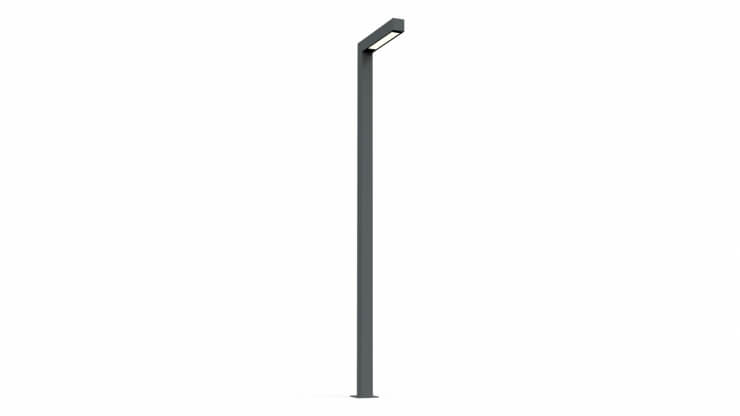










Tell me – would you feel safer walking down a dimly lit lane or a well-lit lane? – Surely you’d go for the one with more light, and that’s where it begins. Better lighting will always make you feel safer as there is less chance of you suffering a crime.
Good lighting does more than just brighten streets, it helps people feel safer in their neighborhoods. More and more city planners are realizing that better lighting can actually help cut down on crime and make people feel safer. Here, we look at several cities that have taken major steps to improve lighting in their communities and seen positive results in crime reduction.
The Psychology of Light and Crime
Lighting has a HUGE impact on the way people act and whether they feel safe in a space or not. Good lighting makes people feel safer because it lowers the risk of crime. This is because when a place is well-lit, it becomes harder for criminals to hide. If they can’t hide easily, they won’t commit crimes in that area.
How Lighting Affects Behaviour
Criminals rely on the cover of darkness to stay anonymous. Bright lights take away that advantage by:
- Making it easier to see people and actions, so crimes are more likely to be noticed.
- Helping cameras or passersby spot suspicious activity.
- Eliminating places for criminals to hide.
How Lighting Fits with Crime Prevention Design
Lighting is a key part of a strategy called Crime Prevention Through Environmental Design (CPTED). It focuses on making physical spaces safer to reduce crime. Here are some ideas that keep lighting as the primary focus.
1. Natural Surveillance
This means designing spaces so people can easily see what’s going on around them. Good lighting makes it easier to spot any suspicious behavior.
2. Territorial Reinforcement
Lighting helps create a feeling that a space is owned and watched over. When places are lit up, it shows they’re cared for and used by people, which discourages crime.
Case Study 1: New York City, USA
Background
In the early 2010s, New York City faced persistent crime challenges in public housing developments. Residents reported feeling unsafe, particularly during nighttime hours.
Intervention
In collaboration with the University of Chicago Crime Lab, the NYC Mayor’s Office of Criminal Justice, the NYPD, and the New York City Housing Authority (NYCHA), a randomised controlled trial was conducted across nearly 40 public housing developments. Half of these developments received new, temporary streetlights, while the other half did not, allowing researchers to isolate the impact of lighting on crime rates.
Results
The study found that areas with enhanced lighting experienced a 36% reduction in nighttime outdoor index crimes, including serious offences such as robbery and assault. It’s a clear sign that smart lighting choices can really help reduce crime.
Case Study 2: London
Background
Several boroughs in London faced challenges with crime and anti-social behavior, particularly in poorly lit areas. Residents expressed concerns about safety during nighttime hours.
Intervention
A meta-analysis encompassing 13 studies evaluated the impact of improved street lighting across various London boroughs. The research focused on areas that underwent lighting upgrades and compared crime rates before and after the interventions.
Results
After better lights were added, crime dropped by 20% — showing just how much of a difference it made. This finding suggests that enhanced lighting can be an effective component of urban crime reduction strategies.
Case Study 3: Kansas City, USA
Background
In the early 1970s, Kansas City, Missouri, faced increasing rates of night-time street crime, particularly in its downtown commercial and adjacent residential areas. To address this, the city initiated a comprehensive street lighting upgrade program aimed at enhancing public safety.
Intervention
Between October 1970 and March 1973, approximately 1,800 streetlights were upgraded from incandescent to mercury and sodium vapour lamps across about 500 blocks. This initiative targeted high-crime areas, including both commercial and residential zones. The project was part of a broader study conducted under the auspices of the National Institute for Law Enforcement and Criminal Justice, with research support from the University of Michigan.
Results
The study assessed crime rates before and after the lighting upgrades, comparing relit areas to non-relit control areas.
Key findings include:
- Violent Crimes: Significant reductions were observed in night-time violent crimes, particularly robbery and assault, in the relit areas.
- Property Crimes: No significant changes were noted in property crimes, such as burglary, suggesting that improved lighting primarily impacted crimes involving personal confrontation.
- Commercial vs. Residential Areas: Crime decreased more rapidly in commercial blocks compared to residential ones, indicating that enhanced lighting had a more pronounced effect in business districts.
- Crime Displacement: A minor displacement effect was observed, with some robberies shifting to nearby non-relit blocks. However, the overall net effect was a crime reduction.
Case Study 4: Chicago, USA
Background
Some neighborhoods in Chicago have struggled with crime for years, partly because of poor infrastructure. Many streets and alleys were dark and not well-maintained, making them unsafe and giving criminals places to hide. City officials realised that just adding more police wasn’t enough. They decided to improve safety by changing the way the city was built, starting with better lighting.
Intervention
Alley Lighting Project:
In the Chicago Alley Lighting Project replaced old, dim lights in alleys were replaced with brighter ones and more light fixtures to reduce dark corners. The goal was to make these areas more visible so people could see what was happening around them, which would help stop crimes before they happened.
Study on Streetlight Outages:
The city also studied how broken or non-working street lights affected crime. They looked at crime rates in areas where street lights were out and compared them to areas with working lights. They also checked if crime moved to nearby well-lit areas.
Results
After the alley lighting was improved, crimes like theft, vandalism, and break-ins started to drop. The brighter lights made it harder for criminals to hide and gave residents a greater sense of security.
Conclusion
Better street lighting is one of the easiest and most affordable ways to make communities safer. Cities all over the world—from New York to London—have seen that brighter streets help reduce crime and make people feel more secure.
At Lighting and Supplies, we’re proud to help make neighborhoods safer with our reliable, energy-saving lighting solutions. If you’re a city planner, property manager, or community leader, we can work with you to create smart lighting plans that keep your spaces safe.
Get in touch with us today to see how we can help you build a safer, well-lit community.